I vividly remember buying my first OLED TV, the LG E8 55-inch, back in 2019—just before the world shifted. Let me tell you: it was the perfect companion for isolation. At the time, I didn’t fully grasp what OLED (organic light-emitting diode) technology truly offered. I knew the basics—no backlight like LCDs, self-emissive pixels, infinite contrast—but it wasn’t until I wandered through the neon-lit streets of Lucis in Final Fantasy XV and braved the haunting ruins in The Last of Us Part II that it hit me. This wasn’t just watching a game—it felt like reliving a vivid, nostalgic dream in real time. Naturally, I didn’t stop at the E8.
A few years later, I upgraded to the LG C2 65-inch, and since then, I’ve reviewed countless devices with OLED displays, discovering a crucial truth: not all OLEDs are created equal. In fact, the underlying technologies vary significantly. You might be wondering, “How many OLED types matter?” The answer? Only three: WOLED, QD-OLED, and AMOLED.
WOLED, QD-OLED, and AMOLED: How They Work
OLED technology has been in development for decades, with early experiments from companies like Kodak and Mitsubishi. It wasn’t until LG launched its first OLED TVs in the early 2010s that the technology truly entered the mainstream.
LG’s version is known as WOLED (White OLED). While the company doesn’t use that term in marketing—perhaps because LG is synonymous with OLED in many minds—WOLED is the foundation of their success. Unlike traditional LCDs, OLED pixels emit their own light, eliminating the need for a backlight and delivering true blacks and infinite contrast. However, early OLEDs faced a problem: red, green, and blue emitters degrade at different rates, accelerating the risk of burn-in.
WOLED solves this by using a white OLED layer paired with an RGBW color filter. Instead of individual colored pixels, every pixel emits white light, which is then filtered into red, green, blue, and white subpixels. While this improves longevity, it introduces new challenges. Filtering light inherently reduces efficiency, leading to uneven brightness and lower color volume. Higher-end WOLED models combat this with Micro Lens Array (MLA) technology, which uses thousands of tiny lenses per pixel to focus and amplify light output.
In 2022, a new contender emerged: QD-OLED (Quantum Dot OLED), heralded by Samsung. QD-OLED replaces the white OLED layer with a blue one, which excites a layer of quantum dot color converters. Unlike filters, quantum dots absorb and re-emit light, preserving brightness and delivering richer, more accurate colors—especially in reds and greens. This results in higher peak brightness and superior color performance compared to WOLED.
AMOLED, meanwhile, occupies its own niche. Structurally similar to WOLED, AMOLED includes a thin-film transistor (TFT) backplane that enables faster pixel response and better power efficiency. This makes it ideal for mobile devices. However, the TFT layer can slightly compromise the deep blacks that define OLED, meaning AMOLED doesn’t quite achieve the same “infinite” contrast—though the difference is often negligible in real-world use.
WOLED, QD-OLED, and AMOLED: Which Is Better for Gaming?
The best OLED type for gaming depends on your setup and priorities. For a straightforward answer: QD-OLED leads in performance. But there are scenarios where WOLED shines—and times when AMOLED is your only option.
AMOLED is most commonly found in smartphones and laptops. Due to cost and manufacturing constraints, it’s rarely used in larger TVs. Its flexibility makes it perfect for foldable devices, and it supports high refresh rates and excellent viewing angles. However, AMOLED screens typically have lower peak brightness, making them less ideal in direct sunlight—ironic for devices meant to be used on the go.
For gaming monitors and TVs, the choice narrows to WOLED (often just called “OLED”) and QD-OLED. WOLED achieves high brightness with white content thanks to its white subpixel, but color brightness suffers due to the filtering process. QD-OLED, on the other hand, delivers brighter, more vibrant colors across the spectrum because quantum dots convert light more efficiently.
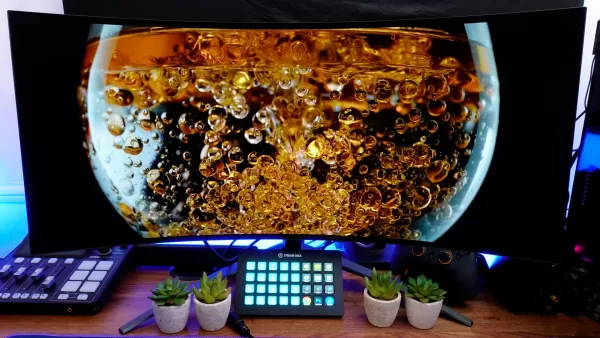
Yet, there’s a catch. My WOLED TV sits across from a window, so glare is inevitable. Even in bright conditions, dark scenes remain truly black. My QD-OLED monitor, however, develops a purplish haze under similar lighting. Why? Samsung removed the polarizing filter to boost brightness, which increases reflectivity. So while QD-OLED wins in color and luminance, WOLED performs better in bright, reflective environments.
Ultimately, display quality hinges on implementation and budget. Higher-tier models with advanced features like MLA or superior anti-reflective coatings will outperform cheaper alternatives—regardless of the underlying tech.
But WOLED and QD-OLED may not dominate forever.
The Future of OLED Is PHOLED
Among the many OLED variants, PHOLED (Phosphorescent OLED) stands out. Unlike standard fluorescent OLEDs, PHOLED uses phosphorescent materials that convert energy into light with up to 100% efficiency—four times more efficient than traditional OLEDs. This means brighter images and lower power consumption.
The challenge? Blue PHOLED materials historically had a much shorter lifespan than red and green, making full-panel production impractical. But recently announced breakthroughs from LG have solved this issue. The company now refers to PHOLED as “Dream OLED” and plans to bring it to market in the near future.
While PHOLED TVs are still a few years away, we’ll likely see the technology debut in smartphones and tablets sooner. When it arrives, it could redefine what we expect from OLED—brighter, more efficient, and longer-lasting displays across all device types.





![Taffy Tales [v1.07.3a]](https://imgs.xfsxw.com/uploads/32/1719554710667e529623764.jpg)